
 TR
TR Land Rover P0128 Fault Code: Coolant Thermostat Temperature Below Regulating Temperature
The Land Rover P0128 fault code indicates that the engine has failed to reach its normal operating temperature within the expected time. Although a faulty thermostat is the most common cause, several cooling system issues may trigger the same fault code.
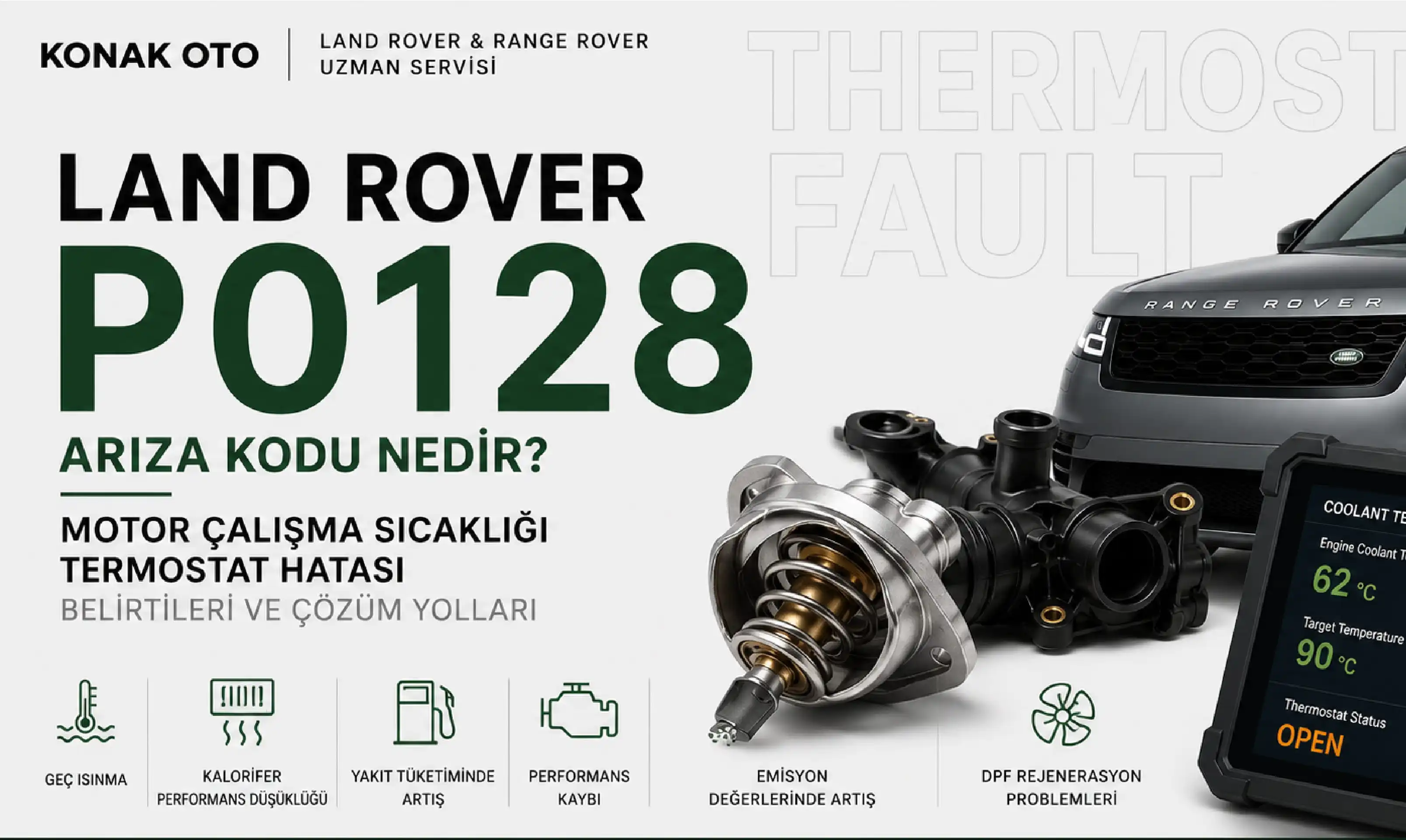
Land Rover P0128 Fault Code: Engine Coolant Thermostat – Causes, Symptoms & Solutions
Modern Land Rover and Range Rover vehicles rely on precise engine temperature control to achieve maximum performance, fuel efficiency, lower emissions, and long engine life. While engine overheating is a serious concern, an engine that fails to reach its normal operating temperature can also lead to significant mechanical and efficiency problems.
The Engine Control Unit (ECU) continuously monitors coolant temperature from the moment the engine starts. If the engine does not reach its expected operating temperature within a predetermined period, the ECU stores the P0128 Diagnostic Trouble Code (DTC) and typically illuminates the Check Engine Light.
Many drivers assume that the P0128 code indicates an overheating problem. In reality, it usually means the engine is running colder than it should.
The P0128 fault may be caused by:
- A thermostat stuck open
- A faulty engine coolant temperature sensor
- Low coolant level
- Cooling system malfunctions
- Electrical wiring problems
- Incorrect temperature data received by the ECU
Replacing the thermostat without proper diagnosis may not permanently solve the issue.
In this guide, we'll explain what the Land Rover P0128 fault code means, its symptoms, possible causes, professional diagnostic procedures, and repair solutions.
Table of Contents
- What Does the P0128 Fault Code Mean?
- How Does the Engine Thermostat Work?
- Symptoms of the Land Rover P0128 Fault
- What Causes P0128?
- How Is the P0128 Fault Diagnosed?
- What Happens If the Fault Is Ignored?
- How Can You Prevent P0128?
- Professional Diagnostics at Konak Oto
- Conclusion
- Frequently Asked Questions
What Does the P0128 Fault Code Mean?
P0128 is a generic OBD-II Diagnostic Trouble Code defined as:
Coolant Thermostat (Coolant Temperature Below Thermostat Regulating Temperature)
This code indicates that the Engine Control Unit (ECU) has determined that the engine failed to reach its expected operating temperature within a specified amount of time.
To make this decision, the ECU continuously evaluates:
- Engine running time
- Engine RPM
- Coolant temperature
- Ambient air temperature
- Vehicle speed
- Fuel injection data
If the engine remains below its target operating temperature, the ECU adjusts fuel mapping and stores the P0128 fault code.
However, P0128 does not always mean that the thermostat itself has failed.
Information Box
P0128 Is a Result Code
The P0128 fault code may be caused by:
- Thermostat
- Engine Coolant Temperature (ECT) Sensor
- Coolant level
- Water pump
- Cooling system
- Electrical wiring
- ECU
Replacing the thermostat without a complete diagnostic inspection is not always the correct solution.
How Does the Engine Thermostat Work?
When the engine is cold, the thermostat remains closed.
This prevents coolant from circulating through the radiator, allowing the engine to warm up quickly.
Once the coolant reaches approximately 88–92°C (190–198°F), the thermostat opens and coolant begins circulating through the radiator to maintain the correct operating temperature.
If the thermostat becomes stuck in the open position:
- The engine warms up slowly.
- Fuel consumption increases.
- Cabin heating becomes less effective.
- The ECU detects a low engine temperature.
- The P0128 fault code may be triggered.
Symptoms of the Land Rover P0128 Fault
Drivers may notice the following symptoms:
- Check Engine Light illuminated
- Slow engine warm-up
- Increased fuel consumption
- Reduced engine efficiency
- Weak cabin heater performance
- Rough idle
- Higher exhaust emissions
- DPF regeneration problems
Slow Engine Warm-Up
One of the most noticeable symptoms is that the engine takes much longer than usual to reach its normal operating temperature.
This is especially noticeable during cold weather.
Increased Fuel Consumption
While the engine is cold, the ECU enriches the fuel mixture.
If the engine never reaches operating temperature, this enrichment continues longer than necessary, increasing fuel consumption.
Poor Cabin Heating
The vehicle's heating system depends on engine coolant temperature.
If the engine remains cold, the cabin heater cannot produce sufficient warm air.
DPF Regeneration May Be Affected
On diesel-powered Land Rover vehicles, low engine temperature may prevent proper Diesel Particulate Filter (DPF) regeneration, eventually leading to additional fault codes.
What Causes the Land Rover P0128 Fault?
Although a faulty thermostat is the most common cause, several other issues can trigger P0128.
Professional diagnostics are essential before replacing any components.
Thermostat Stuck Open
The most common cause of the P0128 fault is a thermostat that remains open.
Instead of allowing the engine to warm quickly, coolant continuously circulates through the radiator, preventing the engine from reaching normal operating temperature.
Faulty Engine Coolant Temperature Sensor
A defective coolant temperature sensor may transmit inaccurate readings to the ECU.
In some cases, the engine reaches the correct temperature, but the ECU falsely believes it is still cold.
Sensor failures may also appear alongside other codes such as P0116.
Low Coolant Level
Insufficient coolant may result in:
- Inaccurate temperature readings
- Poor coolant circulation
- Reduced cooling system efficiency
Coolant level should always be checked during diagnosis.
Electrical Wiring Problems
Corroded connectors, damaged wiring, short circuits, or loose terminals associated with the coolant temperature sensor may result in incorrect temperature readings.
ECU Software Issues
Although uncommon, some Land Rover models may require ECU software updates that improve coolant temperature monitoring and resolve false P0128 faults.
Expert Insight
Replacing the thermostat immediately after seeing a P0128 fault is not always the correct solution.
Professional diagnostics should include evaluation of:
- Live coolant temperature
- Thermostat opening temperature
- Coolant temperature sensor readings
- Coolant level
- Cooling system pressure
- ECU live data
This comprehensive approach helps identify the actual cause while avoiding unnecessary parts replacement.
How Is the P0128 Fault Diagnosed?
Reading the fault code alone is not enough.
Professional diagnosis should include:
- Reading Diagnostic Trouble Codes
- Freeze Frame analysis
- Live coolant temperature monitoring
- Thermostat operation testing
- Coolant temperature sensor testing
- Coolant level inspection
- Cooling system pressure testing
- Electrical wiring inspection
- ECU live data analysis
These procedures help identify the true source of the fault.
Why Is Freeze Frame Data Important?
When the fault occurs, the ECU records operating conditions including:
- Engine RPM
- Vehicle speed
- Engine run time
- Coolant temperature
- Ambient temperature
- Engine load
These values help technicians determine exactly when the fault occurred.
Live Data Analysis
Professional diagnostic equipment compares:
- Coolant Temperature
- Intake Air Temperature
- Ambient Temperature
- Thermostat Status
- Cooling Fan Operation
- ECU Temperature Values
Differences between actual engine temperature and ECU readings often indicate sensor or wiring issues.
Information Box
Does P0128 Always Require Thermostat Replacement?
No.
The fault may instead be caused by:
- A faulty coolant temperature sensor
- Low coolant level
- Electrical wiring faults
- ECU software issues
Professional diagnostics should always be completed before replacing components.
What Happens If the P0128 Fault Is Ignored?
If the engine consistently operates below its normal temperature, several issues may develop:
- Increased fuel consumption
- Reduced engine performance
- Accelerated engine wear
- Higher emissions
- Poor DPF regeneration
- Persistent Check Engine Light
A relatively minor thermostat problem can eventually lead to much more expensive repairs.
DPF Performance May Be Affected
Diesel Particulate Filter regeneration requires the engine to reach normal operating temperature.
An engine running too cold may fail to complete regeneration properly, potentially leading to P2463 or P2002 fault codes.
Reduced Fuel Economy
Because the ECU continues using cold-start fuel strategies, fuel consumption increases and emissions rise.
How Can You Prevent the P0128 Fault?
The risk of P0128 can be significantly reduced by following proper maintenance procedures.
Recommended preventive measures include:
- Regular coolant level inspections
- Using manufacturer-approved coolant
- Periodic thermostat inspections
- Repairing coolant leaks promptly
- Diagnosing Check Engine Light warnings without delay
Professional P0128 Diagnostics at Konak Oto
At Konak Oto, we never diagnose a P0128 fault based solely on the stored fault code.
Our technicians perform:
- Manufacturer-level diagnostic scanning
- Live coolant temperature analysis
- Thermostat performance testing
- Coolant temperature sensor evaluation
- Cooling system pressure testing
- Coolant circulation inspection
- Electrical wiring inspection
- ECU live data analysis
This comprehensive diagnostic process identifies the root cause before recommending any repairs.
Experience Matters
Since 1996, Konak Oto has specialised exclusively in Land Rover and Range Rover vehicles.
Our experienced technicians accurately diagnose cooling system and engine temperature issues using advanced diagnostic equipment and manufacturer-approved repair procedures.
Conclusion
The Land Rover P0128 Diagnostic Trouble Code indicates that the engine failed to reach its expected operating temperature within the specified time.
Although a thermostat stuck open is the most common cause, coolant temperature sensors, low coolant levels, wiring faults, or ECU-related issues may produce the same fault.
Accurate diagnosis requires much more than reading the fault code—it involves analysing live temperature data and inspecting the entire cooling system.
Early diagnosis helps maintain engine performance, improve fuel economy, and prevent more costly repairs.
Frequently Asked Questions
Can I continue driving with a P0128 fault code?
The vehicle may remain drivable, but prolonged operation with a cold-running engine can increase fuel consumption, reduce engine efficiency, and negatively affect DPF regeneration.
Does P0128 always mean the thermostat is faulty?
No. The fault may also result from a faulty coolant temperature sensor, low coolant level, wiring problems, or ECU-related issues.
Can a faulty thermostat increase fuel consumption?
Yes. If the engine never reaches operating temperature, the ECU continues using a richer fuel mixture, resulting in increased fuel consumption.
Can P0128 affect the Diesel Particulate Filter (DPF)?
Yes. Low engine operating temperature can prevent proper DPF regeneration and may eventually contribute to additional DPF-related fault codes.
Can the P0128 fault return after repair?
Yes. If the underlying cause is not corrected and only the fault code is cleared, the ECU will detect the problem again and store the P0128 code.